
Cordial is usually treated as a drink first and everything else second.
You pour it into a glass, add cold water, maybe throw in a few ice cubes, and that is the job done. It is quick, easy, nostalgic, and very Australian. But cordial can do a lot more than sit in the pantry waiting to be diluted. In fact, once you start thinking of it as a flavour concentrate rather than just a drink, it becomes surprisingly versatile.
That is where cordial gets really interesting.
It can bring sharp citrus notes to desserts, bright fruit flavour to frozen treats, sweetness to party food, and a playful twist to mocktails and entertaining. It can be used to make things look more colourful, taste more vibrant, and feel a bit more fun without much effort or expense. For households that already keep a bottle or two around, it is also a very practical ingredient. You do not need fancy syrups, specialist mixers, or complicated recipes to start using it creatively.
If you have only ever thought of cordial as something for a glass or jug, here are some of the best ways to use it beyond drinking.
Why cordial works so well in other recipes
The reason cordial is useful outside the glass is simple: it is concentrated flavour.
It already contains sweetness, strong fruit or citrus character, and plenty of punch in a small amount. That makes it handy in recipes where you want flavour without needing to reduce juices, zest large piles of fruit, or buy extra ingredients. A splash of cordial can sometimes do the work of several components at once.
Citrus cordials like lime, lemon, and orange are especially good for this because they can cut through richer foods and add brightness. Berry and tropical cordials bring colour and a more playful, dessert-like flavour. Even old-school favourites like lemon barley can be used in chilled sweets and refreshing summer recipes.
The key is to remember that cordial is concentrated. A little can go a long way.
Ice blocks: one of the easiest and best uses of cordial
If there is one perfect non-drinking use for cordial, it is probably ice blocks.
This feels almost built into Australian life already. Cordial and hot weather have always gone together, so turning it into frozen treats is an obvious win. It is cheap, easy, and ideal for kids, but adults enjoy it too, especially in summer.
You can make simple cordial ice blocks by diluting cordial as normal or slightly stronger than usual, then freezing it in moulds. Lime makes a refreshing icy treat, raspberry gives you bright colour and sweetness, and orange works beautifully for a classic summery flavour. Tropical flavours like pineapple and passionfruit are especially good if you want something that feels a bit more festive.
What makes cordial ice blocks so appealing is how flexible they are. You can keep them plain, add sliced fruit, mix flavours together, or layer two different colours for something more eye-catching. They are simple enough for everyday use but still fun enough for parties and school holidays.
Slushies and crushed ice treats
Cordial also works brilliantly in slushies.
Because it is already a concentrated sweet flavour base, it blends easily with ice to create that icy, refreshing texture people love on hot days. A cordial slushie feels more exciting than an ordinary glass, but it is still very simple to make. Lime, lemon, orange, raspberry, and passionfruit all work especially well.
You can also pour diluted cordial over crushed ice for a quick frozen dessert that feels somewhere between a drink and a treat. It is easy, nostalgic, and perfect for afternoons when you want something cold without going to much trouble.
This is one of the reasons cordial has such staying power. It adapts so easily to the Australian climate.
Cordial jelly and simple desserts
Cordial can also be excellent in jelly-style desserts and other chilled sweets.
A strong, fruity cordial has enough flavour to carry a simple jelly mixture really well. Raspberry, blackcurrant, orange, and lime are particularly good here. They create bright, cheerful desserts that look appealing and feel familiar. For kids’ parties, cordial jelly can be a very easy win. For adults, it can be dressed up with fruit, mint, cream, or layered presentation.
Beyond jelly, cordial can be used to flavour whipped cream, custard-style fillings, dessert sauces, and chilled puddings. A small amount stirred into plain yoghurt can make a quick fruity dessert. A splash mixed into icing can lift a cake or cupcake without a lot of extra effort.
The beauty of cordial in desserts is that it gives you flavour and sweetness at the same time, which can simplify the recipe.
Cakes, glazes, and syrups
One of the smartest ways to use cordial is in cake syrups and glazes.
A citrus cordial, especially lemon or lime, can be spooned over a warm plain cake to add moisture and flavour. This works beautifully with loaf cakes, simple butter cakes, and muffins. It gives that glossy finish and extra hit of flavour without needing to make a separate syrup from scratch.
Orange cordial is especially good in glazes for citrus cakes. Raspberry cordial can be used in a pink icing or drizzle for cupcakes. Lime cordial can add brightness to a glaze that makes a plain cake feel more summery and interesting.
This is where cordial starts to feel less like a pantry shortcut and more like a genuinely clever ingredient. It can help turn very basic home baking into something much more lively.
Fruit salads that taste more exciting
Fruit salad can be a bit dull when it is treated as an obligation rather than a proper dish. Cordial can help.
A small splash of citrus or tropical cordial mixed through a fruit salad can lift the whole thing. It adds shine, flavour, and a slightly syrupy finish that makes the fruit feel more deliberate and dessert-like. Lime cordial is especially good when you want something fresh and zingy. Orange and passionfruit also work well with mixed fruit.
The key is not to drown the fruit. Just a light coating is enough to bring everything together and make it feel more appealing. This works particularly well for party platters, summer gatherings, or family barbecues where you want a fruit option that actually gets eaten.
Mocktails: where cordial really shines
Cordial is one of the easiest ways to make mocktails at home.
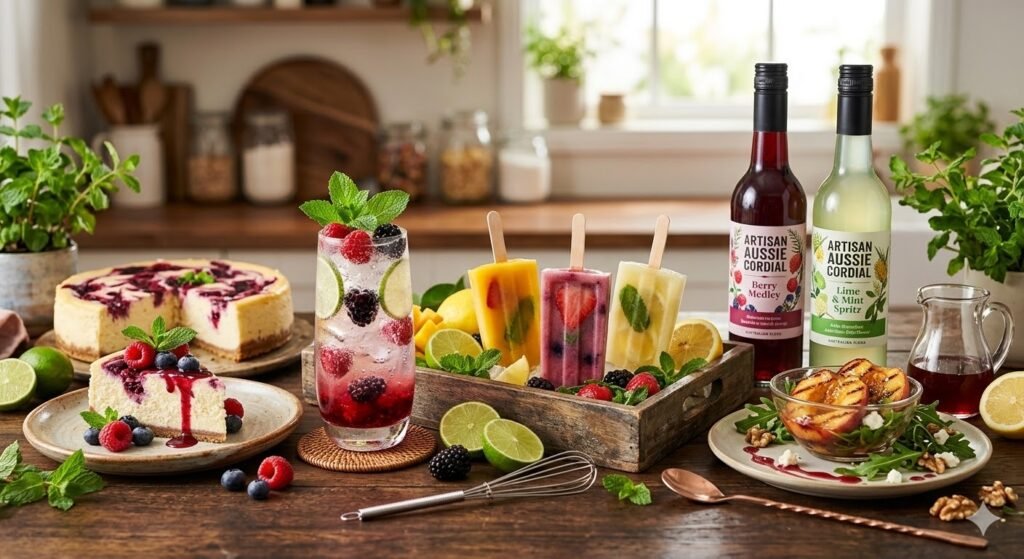
In fact, it is almost made for it. It already behaves like a flavouring syrup, which means it works beautifully with soda water, sparkling mineral water, crushed ice, citrus slices, herbs, and fruit garnishes. A basic glass of cordial can become something much more impressive with very little effort.
Lime cordial mixed with sparkling water, mint, and fresh lime wedges makes a crisp, refreshing mocktail that feels ideal for summer. Raspberry cordial with soda water, lemon slices, and frozen berries can feel playful and party-ready. Passionfruit cordial with orange slices and lots of ice brings a tropical feel. Lemon cordial with sparkling water and mint is simple but very effective.
This is one of the best uses for cordial beyond drinking in the basic sense because it transforms it into something more entertaining. It becomes less “drink from the pantry” and more “easy homemade refresher.”
For Australian households hosting barbecues, birthdays, baby showers, or casual get-togethers, cordial-based mocktails are a very practical option.
Party punches and shared jugs
Cordial comes into its own when you need to serve a crowd.
A well-made punch or large jug drink is one of the best ways to use cordial beyond a standard single glass. It is affordable, easy to scale up, and instantly familiar. You can use a base of cordial with chilled water or sparkling water, then add sliced fruit, mint, ice, and even frozen fruit to make it feel generous and festive.
Lime, raspberry, orange, pineapple, and passionfruit are especially good for large-format drinks. You can even combine flavours for something more interesting. Orange and passionfruit work well together, as do lime and lemon, or raspberry and orange for a bright party mix.
This approach is especially handy for children’s parties, family lunches, Christmas gatherings, or warm-weather entertaining. A big bowl or jug of colourful cordial punch looks cheerful, tastes fun, and costs far less than buying a mountain of bottled drinks.
Cordial in frozen yoghurt and sorbet-style treats
If you want something a little lighter than cake or jelly, cordial can work well in frozen yoghurt and simple sorbet-style desserts.
A splash of fruit cordial stirred through plain or vanilla yoghurt adds colour and sweetness without much effort. Freeze it and you have a very easy frozen treat. Swirl raspberry cordial through yoghurt for a pretty, fruity finish, or use lime for something fresher and sharper.
You can also use cordial as part of a quick homemade sorbet-style mixture with ice and fruit. It gives you that concentrated flavour boost that helps frozen desserts actually taste like something once chilled.
Again, the best part is the ease of it. Cordial saves you from needing lots of separate ingredients.
Drizzling over pancakes, waffles, or shaved ice
Cordial can also be used as a topping.
Not in huge amounts, and not with every flavour, but in the right setting it works very well. A small drizzle of raspberry or orange cordial over pancakes, waffles, or shaved ice can add sweetness and colour. Used carefully, it can act almost like a light syrup. For children especially, this can make a basic snack feel much more exciting.
It can also be used over plain sponge, vanilla ice cream, or frozen dessert bowls when you want a little burst of flavour. Lime and lemon are particularly good when you want something sharper and less lolly-like. Berry flavours work best when you want a sweeter finish.
The trick is restraint. Cordial is concentrated, so it is better as an accent than a flood.
Homemade gummies or fun kids’ treats
For people who enjoy kitchen projects with children, cordial can be used in simple homemade gummies or set treats. Because it is colourful and flavourful, it lends itself well to kid-friendly recipes that are fun to make and fun to eat.
This kind of use suits school holidays, birthday preparation, or rainy-day kitchen time. It is another example of cordial becoming more than just a drink. It turns into a flavour tool for playful, low-fuss treats.
Even adults can use cordial creatively
Cordial sometimes gets boxed in as a children’s pantry item, but that is far too limited.
Adults can use it for dessert flavouring, entertaining, summery mocktails, chilled punches, and citrus glazes with just as much success. In fact, many of the best cordial uses beyond drinking are the ones that make life easier for grown-ups. It is affordable, shelf-stable, flexible, and very handy when you want flavour without complication.
That is part of cordial’s overlooked charm. It is unpretentious. It does not ask you to make a big deal of it. It just quietly gives you plenty of options.
The best cordial uses are usually the simplest ones
You do not need to reinvent the kitchen to get more from cordial.
Some of the best uses are the easiest: turning it into ice blocks, swirling it through yoghurt, mixing it into mocktails, glazing a plain cake, brightening fruit salad, or pouring it over crushed ice on a hot day. These are small, practical ideas, but they work because cordial already brings so much flavour to the table.
That is really the secret. Cordial is not only a drink. It is a shortcut to sweetness, colour, fruitiness, and nostalgia.
And once you start looking at it that way, you realise there is a lot more you can do with a bottle of cordial than just fill a glass.